The Apology:
Hello friends, I am so sorry that it has been a million years since I have posted. Since my last review I have moved houses and acquired a kitten and then the holidays happened, and I am just a little bit behind in my life. I do plan on coming back in full force in this, our year of the apocalypse, so stay tuned for more regular updates.
Instead of a normal post to celebrate my triumphant return to the blogging world, I've decided to do something just a bit different. The following is a list of every book I read in the year 2011, accompanied by a short snippet of what I remember liking or disliking about it. If a book has a * next to the title, that means I especially enjoyed it, and would put it amongst my "best books I read in 2011" (not necessarily published in 2011). A + means it's a book I reviewed in more detail on this blog. Happy New Year, and I hope you'll continue to read :) I hope to make this annual list a yearly tradition!
The Books:
Boy2Girl by Terence Blacker
Kinda funny but kinda mediocre book about gender identity that had promise, but ended up falling a little flat.
* Bink and Gollie by Kate DiCamillo
Oh, I loved this book. Sweet and fun and goofy, perfect for beginning readers and the adults who read with beginning readers -- I also loved the awesome illustrations of the sisters' mid-century modern treehouse.
Saving Sky by Diane Stanley
Not bad -- youngish dystopia with parallels to Japanese internment camps and interesting issues of morality. I wanted a little more character development.
Hunger by Jackie Morse Kessler
Teen with an eating disorder becomes one of the Four Horsemen of the Apocalypse -- another interesting idea in a not incredibly memorable book. Good for kids who like Wintergirls.
Matched by Ally Condie
Another book I wasn't thrilled by (I was in a little bit of a dry spell at this point in my year). Standard dystopia, kinda blah love story, kinda ripped off from every other teen dystopia. Won't read the next ones in the series, though I know a lot of people LOVE them.
Little Brother by Cory Doctorow
I actually listened to this one, and it was a pretty good audio book. Lots of interesting ideas about surveillance, and I especially liked the non-fiction tangents.
Grace by Elizabeth Scott
Scott always writes uniquely and kind of upsettingly. This was beautifully written and disturbing, a dystopia without FEELING like a dystopia.
* Hold Me Closer, Necromancer by Lish McBride
A paranormal book that's actually fun? And clever? And hilarious and gross at the same time? And set in Seattle? Yes please.
Benjamin Franklinstein Lives by Matthew McElligott
Funny sciencey Frankenstein parody for middle grade boys (and girls, of course, but this is one of those "boy books"). Nothing special, but fills a good niche for my patrons.
The Cardturner: A Novel About a King, a Queen, and Joker by Louis Sachar
Another book I listened to -- I really liked it! Despite the fact that it was almost entirely about the mechanics of bridge, this was actually kind of a page-turner. Now I want to learn to play bridge.
Ship Breaker by Paolo Bacigalupi
Yet another teen dystopia set in the future of our own world. Gritty and realistic and page-turning, with interesting characters and moral dilemmas and environmental issues.
Restoring Harmony by Joelle Anthony
Another dystopia (yeesh, I read a lot of those, don't I...), but a more gentle one. In essence a book about a journey and living off the land. Not amazing, but a good change of pace from the action-packed intense dystopias I've been reading.
How to Understand Israel in 60 Days or Less by Sarah Glidden
This one was kinda eerie for me, because it was basically an accurate representation of a birthright trip to Israel, which is something I have experienced. Well done and well presented, I identified with everything the author went through.
* Living Dead Girl by Elizabeth Scott
My second Scott book this year. This one...this one. Man. What a draining experience. Amazingly well written account of a girl who is abducted and used as a sex slave. I listened to this one and was riveted the whole time, though I can't say it's a book I ENJOYED.
The Help by Kathryn Stockett
One of my few adult novels of the year -- I really appreciated the character voices and the page-turningness of this one. I guess I'm on The Help bandwagon.
The Schwa Was Here by Neil Shusterman
I am usually a HUGE Neil Shusterman fan, but this one was underwhelming for me. Maybe it's because I listened to the audio book and couldn't imagine the character voices myself? I just didn't find it that memorable.
Diary of a Wimpy Kid: Rodrick Rules by Jeff Kinney
Honestly, the only thing I remember about this book is that it was a Diary of a Wimpy Kid book. Main character is still a jerk, but it still made me laugh.
*Meanwhile by Jason Shiga
So. Creative. A choose your own adventure graphic novel with a time travel twist. One of the most inventive books I've ever read.
Packing for Mars: The Curious Science of Life in the Void by Mary Roach
Super entertaining non-fiction. Adult book with great teen appeal. You know you want to know what happens if you barf in space.
Out of My Mind by Sharon Draper
Good realistic fiction -- great to give to kids to understand what it means to have cerebral palsy. Kind of heartbreakingly sad.
* The Boyfriend List: 15 Guys, 11 Shrink Appointments, 4 Ceramic Frogs, and Me, Ruby Oliver by E. Lockhart
I can't help it, I love love love Ruby Oliver. I'm not usually one for fluffy teen girl books, but I just so identified with the character and what she was going through.
* Axe Cop Volume One by Malachai and Ethan Nicolle
A compilation of my favorite web-comic. Crawl inside the mind of a five year old boy and his amazing comic-artist older brother. Pure, hilarious, childlike hilarity and joy.
The Mysterious Benedict Society by Trenton Stewart
I'm in the minority on this, I know, but I just COULD NOT get into this book. The beginning was great and it was all downhill from there.
Girl in the Arena by Lise Haines
This book was SO WEIRD. It sounds like it should be a badass book about a girl in a gladiatorial contestant, but it was really about being the child of a celebrity and a has dystopian world that's really not very well developed.
Happily Ever Emma by Sally Warner
Cute middle-grade book for kids who love Ivy & Bean and such. I liked Emma, I've definitely recommended this book to kids a lot this year.
Binky the Space Cat by Ashley Spires
SO CUTE. Great graphic novel for kids about a cat who thinks he's a space traveler. Hilarious and ironic with fantastic art and a sense of humor.
+ How to Grow Up and Rule the World by Vordak the Incomprehensible by Scott Seegert
Excellent Dr. Horrible style "non-fiction" book for kids from the point of view of a failed supervillain. The humor will probably become dated fairly quickly, but it made me laugh out loud.
Theodore Boone: Kid Lawyer by John Grisham
I was not expecting to like this book at all, but I actually really enjoyed it. Grisham knows how to create a page-turner, and his talents translated fairly well to children's literature.
The Adventures of the Princess and Mr. Whiffle by Patrick Rothfuss
Delightfully horrifying. A picture book for adults, do not give this to children. The Edward Gorey/Neil Gaiman fan inside me giggled in terrified delight.
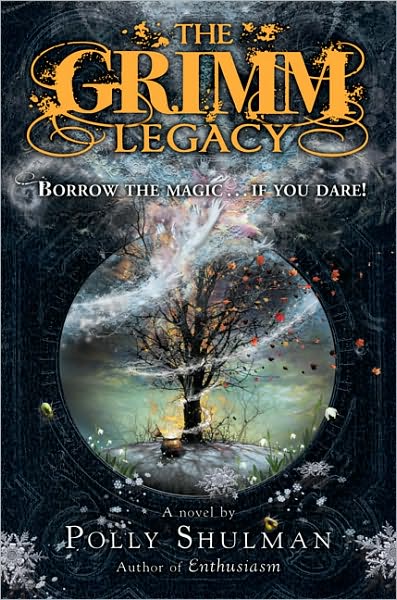
+ The Grimm Legacy by Polly Shulman
Filled with fun literary allusions and a cute romance. I wish I had access to a library that lent out STUFF. Especially if that stuff were magical.
+ Room by Emma Donaghue
Kind of reminded me of Living Dead Girl, but from the point of view of a kid. The author did an amazing job of creating the characters and the world. I could not stop reading.
* The True Meaning of Smekday by Adam Rex
Oh Adam Rex, you are a mad hilarious genius. This was a good one to listen to on audio because the narrator was so fantastic. So. Funny. Only complaint is that it was a little too long.
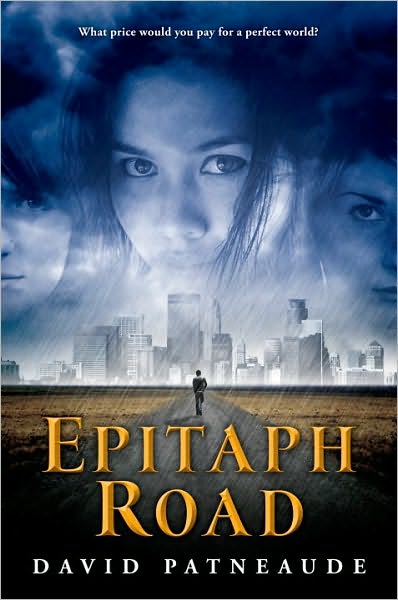
+ Epitaph Road by David Patneaude
Another gentler dystopia for more middle schoolish readers. The world was not incredibly well developed, but the action kept me going. What would happened if the world were more female-dominated than male dominated?
Knucklehead: Tall Tales and Almost True Stories of Growing up Scieszka by Jon Scieszka
About what you can expect from a Jon Scieszka auto-biography. Quirky and hilarious and doesn't skimp on the icky.
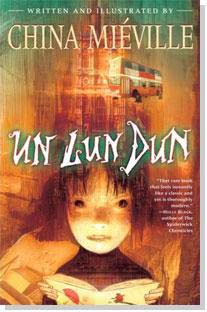
+* Un Lun Dun by China Mieville
So freaking awesome. Maybe one of my favorite books ever, now. China Mieville is the MASTER of imagination, genre stereotype subversion, and quirky awesomeness. Turns every kids' quest book completely on its head.
* Me...Jane by Patrick McDonnell
I don't usually include pictures books on my books read in a year (since I probably read hundreds of them), but this one stood out. I think it's a possible Caldecott contender (we'll find out soon!)
Theodosia and the Serpents of Chaos by R.L. LaFevers
Think Indiana Jones if he were an eleven-year-old girl. Lots of fun Egyptiany stuff. Theo is awesome -- a series I recommend but probably won't read more of.
The Name of This Book is Secret by Pseudonymous Bosch
Does The Mysterious Benedict Society better than The Mysterious Benedict Society did, and does A Series of Unforunate Events not as well. Weird amalgamation of other series, but still somehow well done and enjoyable.
Bossypants by Tina Fey
Listened to the audio book, as it's read by the author. Fun memoir by a woman I respect.
* Will Grayson, Will Grayson by John Green and David Levithan
There's nothing better than crying tears of joy next to strangers while finishing a book on the airplane. They've both outdone themselves, this book is fantastic.
Where the Mountain Meets the Moon by Grace Lin
Lovely intertwining stories based on the Chinese folktale tradition. Beautiful story about the power of storytelling.
Leepike Ridge by N.D. Wilson
Action packed, thrilling ride about a kid who gets sucked into an underwater cave and has to survive. Really liked the references to Greek myths.
Anya's Ghost by Vera Brosgol
Creepy, effective ghost story in graphic novel format. The art was perfect for the story, and the story was a perfect depiction of the ennui of high school.
Superman's Metropolis by Jean-Marc Lofficier
A friend lent this to me because of my love of German Expressionist film. Awesome re-imagining of the Superman origin story told through the perspective of the film Metropolis. Worth reading for the art and creative premise.
* The Wednesday Wars by Gary D. Schmidt
Schmidt really knows what he's doing. Funny and heartwarming piece of historical fiction about an unusual relationship between a kid and his teacher. Achingly beautiful.
+ Beauty Queens by Libba Bray
Wacky wacky Libba Bray. I kind of love her and hate her at the same time -- this book was too long and a little too hit-you-over-the-head political farce-ish, but I appreciated the openness of the female sexuality.
Axe Cop: Bad Guy Earth by Malachai and Ethan Nicolle
Volume 2 in the print version of my favorite webcomic. Hilariously awesome as always.
Page by Paige by Laura Lee Gulledge
Beautifully done graphic novel for teens about a girl's artistic and social awakening in a new city. Amazing use of the medium, much less literal than most graphic novels, takes perfect advantage of the form.
Theodore Boone: The Abduction by John Grisham
The sequel to the first Theodore Boone book -- this one was NOT as good. It felt...scattered and un-polished.
* Ultraviolet by R.J. Anderson
A very awesome, slow-paced, character study sort of science fiction book. I loved the description of synesthesia and the mystery -- the end left a little bit to be desired but in general this is great.
Zombiekins by Kevin Bolger
Another Diary of a Wimpy Kid, Stink, etc. read-a-like. This one stood out because of its fantastic vocabulary and unabashed disgustingness.
Okay For Now by Gary D. Schmidt
Companion novel to The Wednesday Wars, which I also read this year. Much less funny and more somber than its predecessor, but every bit as wonderfully written and honest.
* Divergent by Veronica Roth
Best dystopia I read this year, hands down. It's a weird amalgamation of every other teen dystopian/romance novel, but for some reason it just WORKS. Great characters, great violence, great story. One of the few series I'll probably read the second book of.
A Monster Calls by Patrick Ness
A sad, beautiful exploration of death and grief. I liked it, but had a hard time figuring out who the audience would be. Also wish there were more character development between the main character and his dying mother, so I cared more.
The Chronicles of Harris Burdick: Fourteen Amazing Authors Tell the Tales by Various
A follow-up to Chris Van Allsburg's brilliant illustrated book in which famous teen writers create stories around the drawings. Some of the stories were great, but as a whole I was kinda disappointed.
Dear Anjali by Melissa Glen Haber
Decent exploration of a young girl's grief over the death of her best friend. The writing style kind of annoyed me (it seemed affected and dumbed-down).
The Number 73304-23-4153-6-96-8 by Thomas Ott
I have a special place in my heart for wordless graphic novels, especially when they look like a cross between Edward Gorey and Dore. This one was creepy and effective. Reminded me of the movie Pi.
* Leverage by Joshua C. Cohen
Really really well done, but really really hard to read. Rape, bullying, violence, and people just generally being horrible to each other. Fortunately the two main characters are both excellently portrayed and interesting real people.
Wonderstruck by Brian Selznick
I love Brian Selznick's art, and I love his storytelling, but I wish he had a better editor (for the writing parts of his work). I thought Hugo Cabret took better advantage of the medium, but this was well done too.
Friday, January 6, 2012

Thursday, October 6, 2011
Beauty Queens by Libba Bray

The Review:
Beauty Queens was actually a really polarizing book for me. I absolutely adored some things about it, and there were other aspects that I really kind of hated. Overall, I will definitely recommend it to people because the parts I loved were REALLY well done, but I think in order to accurately depict my thoughts on the book, I'm going to split this review into two parts.
Things I adored:
What I think Libba Bray does very well is characterization and stereotype subversion. At the beginning of this book, I felt pretty meh about every character. I'm not exactly a pageant type of girl, and I was worried these characters were going to annoy me. Needless to say, my own expectations were exactly what Libba Bray was trying to prove wrong. Every character in this book has an interesting back story. Not just interesting, but surprising and realistic and funny and smart. I don't want to ruin these surprises for you as a reader, so I won't be specific -- I'll just say that all of these beauty queens could be real people who I might actually be friends with. Libba Bray knows how to write for and about girls.
Another thing Libba Bray knows how to do is write about sexuality. She puts her female characters in situations every teenage girl has found themselves in at one time or another. The dude wants to have sex but there's no condom around. The girl has a crush on her best friend but doesn't know if she likes girls. The girl really wants to have sex but everyone around her has told her that it's wrong and immoral. She not only puts her characters into these situations, but she has them deal with them in realistic and smart ways. Modelling intelligent sexual decision-making is SO much more interesting and effective than not broaching the subject, so well done there Ms. Bray.
Things I abhored:
I have to say that the attempt at humor and political satire in this book DID NOT WORK. It was just. Too. Over the top. The consistent "commercial breaks" and scripted interviews with obvious Sarah Palin and George Bush spoofs were just forced and not subtle and ...unnecessary. The heart of the story was about the characters, and when Libba Bray tried to force political commentary down my throat, I just found myself getting annoyed instead of laughing. I'm not sure how teenage readers feel about this aspect of the book, but I'd love to hear their opinions. In some ways, the obviousness of the humor felt degrading -- as if teens need it to be REALLY spelled out that "look here, this is some political humor!" I think teens are smarter than that, and deserve some finessed subtlety to their humor.
I also had a similar problem with this book that I had with Going Bovine. It is just too long. If Ms. Bray had edited out some of the politics and made the book a more manageable size and a quicker pace, she may have had a girl power masterpiece on her hands.
So there we go -- I recommend this for older teens (esp. girls, and guys who want to know what girls are REALLY like) due to the sexuality and some drug use/drinking. Anyone else read this and have thoughts?
Sunday, September 11, 2011
Anya's Ghost by Vera Brosgol

The Review:
First of all, I apologize for the long break between my last post and this one! I went on multiple vacations in August and basically haven't had a free day since the last time I blogged. Hopefully from now on I'll be back to my usual once-a-week posting schedule, and hopefully all of your Augusts were as awesome as mine. Back to your regularly scheduled programming.
So, Anya's Ghost. I've been awaiting this one for awhile actually -- it's been out for a long time, but my library system JUST got it in, and I read it as soon as my hold showed up. I had read good things about it, and this is JUST my type of graphic novel (I. Love. Ghost stories.). In many ways, this is a very classic ghost story. Girl falls down well (The Ring), meets ghost. Ghost and girl become friends (Caspar?). Ghost is more sinister than previously thought, and gets scaaary.
For me, though, what makes a scary story good is when it has more substance than just being scary. I think Vera Brosgol did this very well. Before the ghost even shows up, she sets up her main character to have some problems. Anya won't accept her Russian heritage and isn't very respectful to her family, she doesn't think very highly of herself, and of course she likes the unattainable guy who is supposed to be kind of a douchebag. What Vera does a great job of is tying Anya's personal problems into the ghost story. In fact, at its core, this isn't really a ghost story at all. It's a story about a teenager coming to terms with who she is, and realizing that maybe her real self isn't so bad after all.
But the spooky parts are really well done. A lot of this is a credit to the art -- the images of Emily the ghost slowly becoming unhinged are SPOT ON. A girl who at first seems innocent and innocuous very gradually and slowly becomes more and more creepy and menacing, and Brosgol definitely takes advantage of the medium she chose to tell her story in.
Really the only complaint I have with this book is that I felt like the whole thing was a little rushed. I wanted it to go on longer, I wanted Anya to go just a little deeper into her own psyche, and I wanted the scary parts to be more well paced. This is a short book (you could probably read it in one sitting in an hour or so), and I really wanted it to take me longer to read! I will definitely recommend this to kids who come in and tell me they loved Raina Telgemeier's Smile (after making sure they're OK with a little bit of scary added in, of course), and Neil Gaiman's Coraline. Probably best for middle school and up, just because it is about a high schooler and there's some smoking and partying and general teenage debauchery. I hope Vera Brosgol writes another graphic novel soon!
Monday, August 1, 2011
Un Lun Dun by China Miéville
 The Book Talk:
The Review:
It almost seems redundant to write a review of this book after the book talk, because I loved it so much that I think all of my opinions come across pretty clearly in the video. However, I'll try to add a little more to this written review to express why it was that I loved Un Lun Dun so much (seriously, probably the best book I've read this year so far).
I am not quite sure how the author managed to cram every page so chock-full of imagination. If anyone else had tried, I think it would have seemed cluttered and disorganized, but Miéville somehow manages to fit imaginative world-building, over-the-top characters, and wordplay onto every page without it seeming forced or overdone. Whether he's writing about the silly Slaterunners, the fearless race of Binja (garbage cans who also happen to be ninjas), or his sassy main character Deeba, Miéville's genius and wit and creativity shines through.
One criticism I have seen of this book is that the villain/environmental message seems a bit heavy-handed. I actually completely disagree with this -- while there is an environmental message (the villain is a giant cloud of Smog), this book isn't about environmentalism really at all. It's about taking the real world and its problems, and turning them on their heads. Miéville uses the Smog not in a preachy way, but as a way to get the most of his characters and teach them that that the real world does not work in a fantastic way. Of course it would be nice if we had a hero who had been destined to come to power and thwart the evil in our world, but that's not how it works! In the REAL world (as in Miéville's fantasy world), REAL PEOPLE have to STEP UP and DECLARE themselves heroes. Take responsibility and march into action, instead of waiting for someone the world has "decided" is going to save everything. That's the real message of this book, not that pollution is bad.
I could go on and on about the characters and the wordplay and the world, but I think that everyone should just pick this book up right now and go read it, instead. For fans of steam punk and Alice in Wonderland and The Phantom Tollbooth and The Chronicles of Narnia who want to be blown away by the power of the human imagination.
Anyone else read this? What do you think?
Monday, July 18, 2011
Epitaph Road by David Patneaude
 The Book Talk:
The Review:
I'm a sucker for dystopian literature. If a book is about a futuristic/alternate society where things aren't perfect, I'm probably going to read it no matter what it's about. Epitaph Road is the book I chose for the middle school book group I'm running at the library I work for, because I wanted to choose a good middle school appropriate dystopia that could get them talking.
One of the most important aspects of a dystopian novel, for me, is the world-building. In order for an oppressive society to believable, the world in which it is set has to be well constructed and vividly imagined. I enjoyed the basic concept of the world in this book. It was an interesting idea to play with a society that is mostly run by women (one that I thought was very well done in the adult graphic novel Y: The Last Man). There are glimpses of great world building in Epitaph Road, but overall it was less vivid than I wanted it to be. There's a little history lesson embedded in the story that gives some background on the way the world came to be, but I never really felt immersed. It also felt a little odd to me that the main character, a male, did generally seem to agree with the fact that a society with only 5% men was better than one with a 50/50 gender ratio (women can live safely, FINALLY!). Basically, the idea was interesting, but the world and its concept could have been better and more clearly executed.
I felt kind of the same way about everything else in this book, actually -- like it was about halfway to where it needed to be. The action and the setting was a little muddy (I just had a hard time picturing what was happening), and the characters were just not that interesting. A lot of terrible things happen to people in this book, and I never really felt like I got to know any of them well enough to care about their well-being and their relationships with each other. I did enjoy the voice of the main character (David Patneaude does not dumb down the text, which is nice), but I to know more about the differences in personality between Tia and Sunday, the two main female characters (to me, they really seemed like the same person).
Overall, not a bad dystopia, but not one of my favorites either. I wanted more clear realization of the world and its characters, but the overall sad mood of the book really did take me in and make me think. I would recommend this book for 6th graders and older who like books like Gone and The Hunger Games. I know a lot of other people enjoyed this book, so I'd love to hear other opinions!
Random side note: David Patneaude is actually coming to my middle school book group at the library tomorrow, and I'm looking forward to what he says about his novel. Maybe my opinion'll change a bit once I've heard him speak!
Thursday, July 7, 2011
How to Grow Up and Rule the World, by Vordak the Incomprehensible

The Review:
After I finished reading How to Grow Up and Rule the World, I had this weird feeling that I had experienced it before. It took me a little bit of thinking, but then I realized -- oh yeah! This is basically a print version of "Dr. Horrible's Sing-along Blog", but for kids! But then I thought about it a little more, and I realized that it really is a different idea. "Dr. Horrible" was a great because it was a great story. This book is great for a different reason.
While it is classified as fiction, this book is actually kind of an awesome introduction to non-fiction for kids who usually read fiction. At its core, it's a non-fiction instruction manual on how to become a successful super villain. The chapters are organized by subject (how to create a lair, how to dress, etc.). There really is no story to speak of, except for the little tidbits Vordak interjects about his own personal life, and how he may have become a failed super villain himself. Yet, with minimal narrative to lean on, this book kept my attention. It is completely riddled with hilarity (Vordak's sense of entitlement and pomposity will surely make anyone giggle), and the illustrations are appropriately comic-like (and also funny). I really enjoyed the interactive nature of some of the text (you actually get to create your own super villain name, and there are fun charts to help you figure out what your costume should look like).
This is definitely a good boy book, and an excellent book for kids who might love to read but are intimidated by stories without pictures. I book-talked it to local elementary schools, and I instantly had kids coming to the library and asking me for Vordak left and right -- one of the best things was that I had kids of all ages and both genders requesting it! Girls want to be super villains too.
The one problem I had with How to Grow Up and Rule the World was that it had some jokes that were a little too current. Some were current to the point that they were already not that funny any more (The Jonas Brothers faded away pretty quickly...it should probably already be adjusted to Justin Bieber). I am hoping that this doesn't mean that the book will be dated and irrelevant really soon, and that the publishers will update the jokes every once in awhile to keep it up-to-date.
Other than that though, this is a great pick for Diary of a Wimpy Kid lovers, humor fanatics, and comic book fiends.
Monday, June 27, 2011
The Grimm Legacy, by Polly Shulman
The Review:
I think this is the first book I've reviewed/talked about that's actually targeted at teens, which I am going to try to do a little more from now on. The Grimm Legacy, by Polly Shulman, is at its heart a fun summer read, a fantasy with literary allusions and quirky characters. There are a lot of aspects of this book I really liked, and a few things that bugged me a little, and I'll talk about both.
First, the good. This book has a great setting. The idea of a library that lends objects is just fantastic, and the way that Shulman describes the setting is spot on. There's a feeling of whimsy, but also a little creepy darkness. Instead of transmitting messages through messengers or e-mail or phone, the Repository uses pneumatic tubes to pass information, which is just awesome. I've always been a pneumatic tube fan, and this detail added just the right atmosphere to this library, which is set in the modern world but feels just a little mysterious and old fashioned.
Another good thing about this book is the well-researched literary references. Shulman pays homage to many of the lesser known Grimm fairy tales, and aspects of the stories become important to her own story in ways that make the reader really want to read the original. After reading this book, I really want to re-read The Twelve Dancing Princesses, and the next book I check out of the library may very well be a collection of the original Grimm stories.
Now, on to the aspects of the book that I didn't like quite as much. This book is filled with really fun characters. Elizabeth's friend Anjali and some of the librarians were given interesting personalities and back stories, but Elizabeth herself was really just a little dull. Shulman tried to give her character traits that made her parallel a fairy-tale character (a "wicked" stepmother and step-sisters, having to do chores all the time), but the end results was that she just didn't have very much personality. The one personality trait Shulman gave her was a love for and remembrance of fairy tales, and it just wasn't enough to carry the story. I wished that Anjali had been the main character instead; she was far more interesting person (or at least had the potential for interesting-ness).
Another thing that bothered me was the relationship between Elizabeth and Aaron. They have a rivalry throughout the book which was actually intriguing (I liked that I never knew whether Aaron was good or bad), but the way their relationship worked out at the end was just kind of...meh. I don't want to give too much away, but let's just say that the way things worked out did not match the way things were going through the rest of the book.
To summarize, I did enjoy this novel. It had a great setting and a good forward-propelling mystery, but I just wanted the characters to have a little more depth/personality. It was a fun summer read (and I do actually hope there's a sequel so the setting's full-potential can be realized! Not only is there a "Grimm Collection", but an "H.G. Well's Bequest", and both a "Gibson" and "Lovecraft" collection, which I would've loved to see utilized a little more).
Let me know if you've read this, and what you've thought of it, or if it sounds like something you'd like!
Subscribe to:
Posts (Atom)